
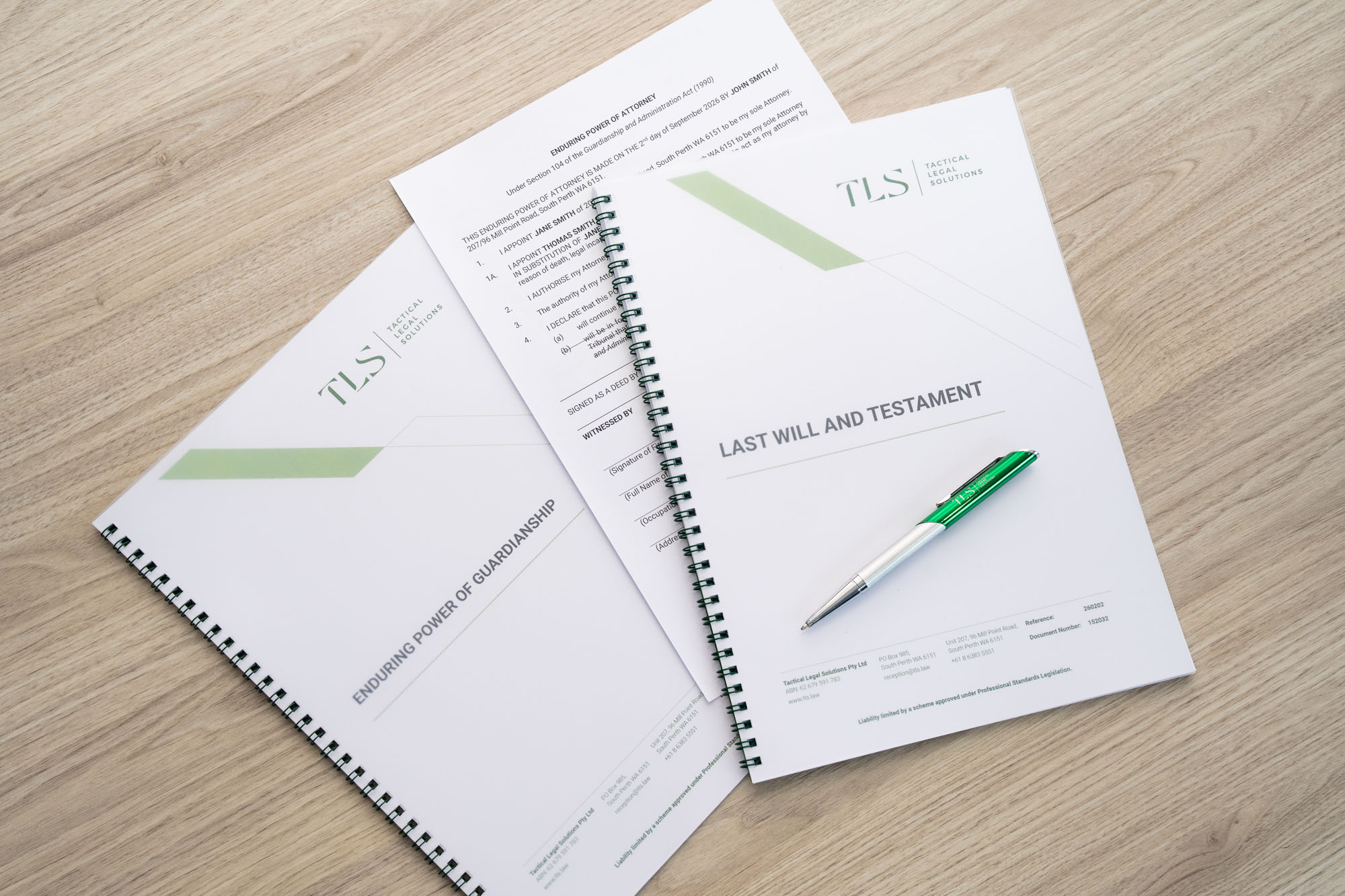





Inheritance Claims
Navigating an inheritance claim can be complex and emotionally challenging. Whether you’re contesting a will or defending your rightful share, TLS provides expert legal guidance tailored to your specific circumstances.
 latest Blog
Can Your Ex De Facto Inherit Under Your Will? | TLS
Securing What's Rightfully Yours
Navigate Your Inheritance Claim with Confidence
If you believe a Will didn’t provide you with a fair share of a deceased estate, you may have the right to make an inheritance claim.
TLS supports clients on how to pursue or respond to claims under the Family Provision Act 1972 (WA). We act for eligible claimants, beneficiaries and executors, helping you understand your position and make confident decisions.

Making a Claim
Can You Make a Claim?
Under the Family Provision Act, you can make a claim if:
- You are an eligible person (such as a spouse, child, stepchild, grandchild or parent).
- You can show that the Will does not provide adequate provision for your maintenance, support, education or advancement in life
- It is within 6 months of the date Probate or Letters of Administration was granted.
When assessing your claim, the Supreme Court of Western Australia will consider:
- Your financial circumstances, age and health
- What (if anything) you received from the estate
- The size and nature of the estate
- Your relationship with the deceased
- The needs of other beneficiaries or claimants
- Any contributions you made to the estate

Making a Claim
Making a Claim Under the Family Provision Act
If you have been left out of a Will, or haven’t been adequately provided for by the estate, you may be eligible to make a family provision claim under the Family Provision Act 1972 (WA).
This legislation recognises the moral obligation of a Will-maker to provide properly for certain dependents. Making a claim against a large or complex deceased estate is a technical process that requires robust legal preparation and a clear presentation of your financial need.
You may be eligible to contest the Will if you are the deceased’s spouse or de facto partner, child, or in some cases, a stepchild, grandchild, or parent who was dependent on the deceased.
To succeed, you must comprehensively show the Supreme Court that the Will failed to leave you with adequate provision for your maintenance, support, education, or advancement in life. The Court of Western Australia will assess various factors, including your financial needs, the nature of your relationship with the deceased, and the overall value and fairness of the estate distribution, before deciding if additional provision should be made from the assets of the deceased.
We provide tailored advice on how best to present your needs to the Court and maximise your chances of success in receiving a fair share of the estate.

Is this you?
Protecting Your Right to Fair Provision
If you believe you have been unfairly left out of a Will or inadequately provided for, understanding your legal rights is the first step. We provide strategic advice tailored to your circumstances and objectives.
 A Loved One Passed Without a Will
You believe you’re entitled to a share of the estate, but there’s no Will in place to guide the distribution.
 You Were Left Out of a Will
Despite a close relationship with the deceased, you were excluded or inadequately provided for in their final Will.
 You're a Dependent Who Wasn't Provided For
As a spouse, child, or financial dependent, you relied on the deceased and now face uncertainty about your future support.
 You Suspect the Will Is Invalid
You have concerns the Will was made under undue influence, coercion, or when the deceased lacked mental capacity.
 A Promise Made to You Was Broken
You were assured you’d inherit property or assets, and made significant life decisions based on that promise.
 The Estate Is Being Mismanaged
You believe the executor or administrator is not acting in the best interests of the beneficiaries or is delaying distribution.
Key Considerations
Important Factors to Consider When Making or Responding to an Inheritance Claim


Not Sure Where to Start?
Every legal matter is different. Tell us about your circumstances, and we'll help you find the right legal solution.
Understanding Your Eligibility
Determine whether you are entitled to make an inheritance claim under the relevant legislation.
Acting Within Time Limits
Inheritance claims are subject to strict deadlines, making early legal advice essential.
Assessing Your Circumstances
Factors such as financial need, family relationships and the size of the estate may influence your claim.
Gathering Supporting Evidence
Strong documentation can help support your position and improve the prospects of a successful outcome.
Exploring Resolution Options
Many inheritance claims can be resolved through negotiation or mediation without proceeding to trial.
Protecting Your Interests
Obtaining experienced legal advice helps ensure your rights are protected throughout the process.

Common mistakes to avoid
Protecting Your Rightful Inheritance.
Inheritance claims can be derailed by avoidable errors. From missing deadlines to misunderstanding legal requirements, these common pitfalls can cost beneficiaries their rightful share. Some common mistakes people make include:
- Missing Filing Deadlines
- Not Seeking Legal Counsel Early
- Failing to Gather Key Documents
- Ignoring Tax Implications
- Disputing Without Mediation First
- Overlooking Intestacy Rules



Frequently Asked Questions.
An inheritance claim is a legal action to challenge the distribution of a deceased person’s estate, typically when a beneficiary believes they were unfairly excluded or inadequately provided for.
Time limits vary by jurisdiction, but most inheritance claims must be filed within 6 months from the date Probate/Letters of Administration is granted. Acting quickly is essential to preserve your rights.
In Western Australia, spouses (including de facto), children, parents, and in limited circumstances, grandchildren and step-children, may be eligible to make a claim for provision from the estate.
While not legally required, inheritance claims involve Supreme Court litigation. A specialist solicitor can significantly improve your chances of a successful outcome.
If a Will is contested, the Court reviews the validity of the document and the circumstances of the claimant. The estate distribution must be deferred until a resolution is reached.
TALK TO A LAWYER
Looking for clear and personal advice?
Whether you are planning ahead, managing a deceased estate, or dealing with an estate dispute, our team is here to provide clear, practical and compassionate legal advice.